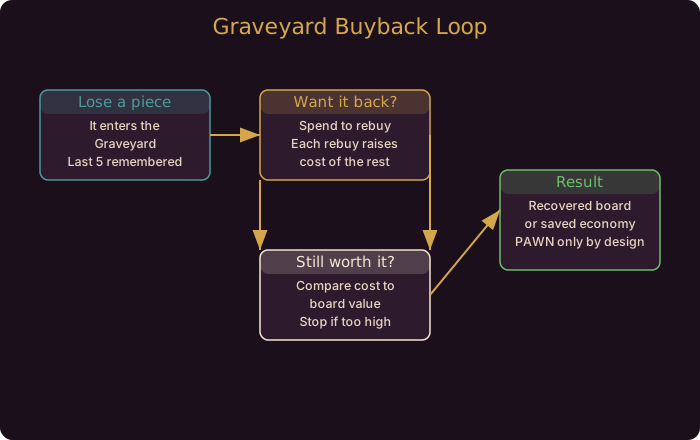
The Graveyard is a new piece-recovery system introduced in Gambonanza v1.4.0. It holds your last 5 lost pieces during a run, and lets you spend money to bring them back. Each piece you recover raises the cost of every remaining piece in the Graveyard, so the system punishes greedy recovery attempts while still giving you a genuine second chance. This guide covers exactly how the system works, how the cost escalation math plays out in practice, which pieces are worth buying back, and the design logic behind why it only appears on PAWN difficulty.
How the Graveyard Works
On PAWN difficulty, the Graveyard appears as a dedicated UI panel during your run. It tracks the last 5 chess pieces you lost in chronological order, oldest first. When you open it, you see each piece listed with a buyback price.
The critical mechanic is this: every time you recover a piece, the price of all remaining pieces in the Graveyard goes up. Think of it like a shared escalation pool. The first recovery is relatively cheap; the fifth is substantially more expensive. You cannot reset or reduce the escalating cost once it starts climbing.
A hotfix note from 1.4.0f is worth knowing: the Graveyard could get stuck in a broken state if you quickly hid it after buying the last available piece or immediately pressed NEXT. This has been patched, but it reinforces that the system is transactional - commit to a recovery and see it through.
Buyback Decision Framework
The cost escalation is not enumerated by the developers, so we cannot give exact dollar figures. What we can say with confidence is the principle: the system rewards decisive, prioritized recovery over scattered partial buys.
When to Buy Back a Piece
Buy back a piece when it meets at least two of these criteria:
- It is a build-defining piece - a Queen driving your offense, a King anchoring your defense, or a piece that triggers a core Gambit engine.
- It would take multiple turns or significant gold to recruit a replacement through normal channels.
- The piece is synergistic with your other pieces - losing it breaks a combo or downsizes your board significantly.
- You have the gold available right now without gutting your economy for the next fight.
When to Let It Go
Let a piece go when:
- It is easily replaced - a lone PAWN or a spare ROOK you would not miss.
- You are in an early stage and your build has not solidified yet - recovering a Knight at stage 2 might lock you into a suboptimal path if you swap pieces later anyway.
- The escalating cost means buying it back now would make recovering your actual priority pieces unaffordable in the same run.
Recovery Priority Order
Use this rough hierarchy when deciding what to buy back:
| Priority | Piece Type | Reason |
|---|---|---|
| 1 | Queen | Highest value, hardest to replace, biggest synergy multiplier |
| 2 | Knight | Unique movement, strong in most board states |
| 3 | King | Defensive anchor, losing it can collapse your board |
| 4 | Bishop / Rook | Conditional value - buy back if they are active in your current Gambit setup |
| 5 | Pawn | Almost never worth the escalating cost. Recruit a new one. |
Spread your recovery budget across your top 2-3 pieces. Trying to recover all 5 is almost never worth the cumulative cost, and spending gold aggressively early can leave you underfunded for mid-run combat.
Why It Is PAWN-Only by Design
The Graveyard is gated to PAWN difficulty and vanishes from KNIGHT onward via the Strain system. This is intentional design, not an oversight.
PAWN difficulty exists as the learning layer. New players, or players experimenting with unfamiliar Gambit combinations, benefit from a safety net that lets them recover from a bad trade or an unlucky enemy formation without restarting the entire run. The Graveyard means one bad turn does not erase 20 minutes of progress - you can still see whether your build works at scale.
Starting from KNIGHT, the Strain system removes the Graveyard entirely. The reason is straightforward: higher difficulty runs are supposed to punish bad decisions. The threat of permanent piece loss adds weight to trades, formation choices, and Gambit activations. If the Graveyard existed at KNIGHT, players could take reckless positions knowing a buyback was always available - which undermines the deliberate risk calculus that roguelike difficulty depends on.
This does not mean PAWN is trivial. It means PAWN is the right difficulty for learning. Once you are comfortable with a Gambit combination and understand your piece economy, climbing to KNIGHT and beyond is where the Graveyard’s absence becomes part of the challenge.
Strategic Takeaways
- Treat the Graveyard as insurance, not a routine tool. The first buyback is cheap enough to feel free, but the escalating cost quickly makes repeated use punishing.
- Budget before you browse. Decide which 1-2 lost pieces actually matter to your current build before you open the panel. The interface shows all 5 at once and updating costs in real time as you buy - use that feedback, but do not let it pull you into recovering pieces you do not need.
- If you plan to recover multiple pieces, buy them in the same session before spending gold elsewhere. The cost is shared and climbing - delaying a recovery does not freeze the escalation.
- On KNIGHT and above, mentally simulate a Graveyard before you commit to risky trades. Pretend the safety net does not exist, because on those difficulties, it does not.
How the Buyback Cost Scales Each Time (and the Diminishing-Return Wall)
The Graveyard keeps your last five lost pieces, but every time you buy one back, the cost of the remaining pieces goes up. The patch notes call this out directly: each repurchase raises the price of what is still in the graveyard.
The practical ceiling: once a piece costs more to recover than it is worth on the board, stop. A common mistake is clawing back three or four pieces in a panic and ending up unable to afford the one that actually matters. Spend on the piece that swings the current fight, let the rest stay buried, and revisit only if the board state changes.
Community Resources
- Official Gambonanza Steam News (v1.4.0 announcements){target="_blank" rel=“noopener noreferrer”}
- All 200+ Gambits on the Gambonanza Wiki{target="_blank" rel=“noopener noreferrer”}
Guide updated for Gambonanza v1.4.0 (released August 2026). The Graveyard system, buyback escalation mechanic, and PAWN-difficulty gating are all confirmed from the official v1.4.0 Steam news post and hotfix 1.4.0f.